
You locked down the land, sketched out ideas, and now one question keeps coming up: how long until you can actually move in?
Most people plan on a custom build in 8 or 9 months. The real timeline in Connecticut is closer to 12 to 18 months, sometimes longer. Fairfield County towns run their own permit offices on their own schedules. Lot conditions vary from town to town. The finish work alone chews through more time than buyers typically plan for. To know more, read this blog until the end.
The Realistic Custom Home Timeline in Connecticut!
Every build moves through its own set of conditions, but the general sequence of phases stays consistent. The table below shows where time goes across a typical Connecticut custom home construction timeline:
| Phase | Typical Duration | Key Factors |
| Design & Planning | 2 – 4 months | Architect revisions, owner decisions |
| Permits & Approvals | 2 – 4 months | Town complexity, zoning, wetlands |
| Site Prep & Foundation | 4 – 8 weeks | Soil conditions, weather, and lot grading |
| Framing, Roofing & Rough-Ins | 2 – 3 months | House size, crew availability |
| Interior Finishes | 3 – 5 months | Selections, subcontractor schedules |
| Final Inspections & CO | 2 – 6 weeks | Town backlog, punch list items |
| Total Estimated Timeline | 12 – 18+ months | Varies by town and scope |
What Happens Before Construction Starts?
Most homeowners look at this phase wrong. They treat it as paperwork before the real work starts. It is actually where the custom home building phases begin, and where projects already start falling behind.
Before anyone touches the ground, a project needs to clear a full list of items:
- Land survey and soil testing
- Architectural design and structural drawings
- Mechanical, electrical, and plumbing plans
- Energy code compliance review
- Zoning and setback verification
- HOA approval, if applicable
How Connecticut Permits and Approvals Affect the Schedule?
Custom home permits in Connecticut sit at the center of the how long to build a house in Connecticut question because no other phase has more variables outside your control. Two towns, ten miles apart, can have review timelines that differ by up to two months.
Your project might need sign-off from several departments, not just one:
- Building department
- Zoning board of appeals
- Inland Wetlands Commission
- Health department for septic or well permits
- Historic district commission in certain neighborhoods.
Site Prep, Excavation and Foundation Work in Fairfield County!
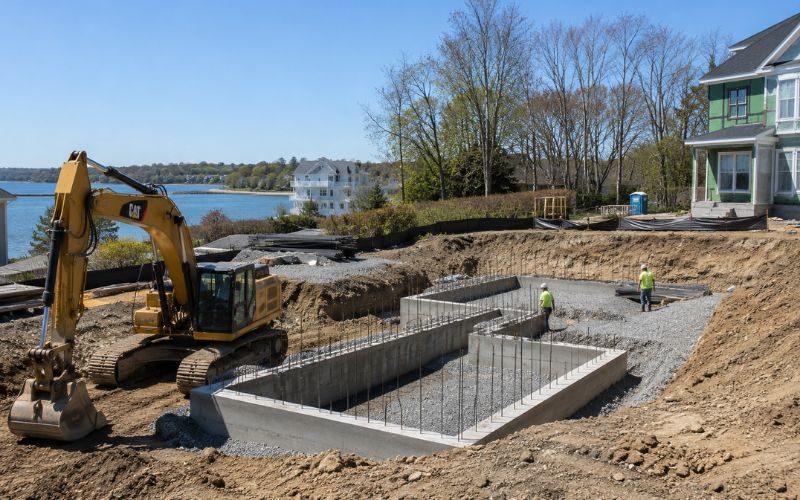
Permits approved, crew mobilized. Site prep moves through land clearing, rough grading, erosion controls, and utility staging before the excavator ever opens the foundation hole.
The Fairfield County custom home timeline for this phase typically runs four to eight weeks. That number shifts fast depending on what the ground looks like. Ledge rock shows up under a lot of lots in Easton and Redding. .
After the foundation walls are poured, the concrete needs time. Seven to ten days of curing before framing loads go on top of it. Builders who skip or shorten that window create problems that show up later in the structure.
Framing, Roofing and Rough-Ins
Framing moves faster compared to other phases. A skilled crew puts up the shell of a large custom home in three to five weeks. The roof deck and shingles follow right behind and the house goes weather-tight.
Rough-ins come next and they cover all the mechanical work that lives inside the wall cavities before drywall goes on. Every system gets inspected by the town before anyone closes a wall.
Framing through rough-in sign-off runs two to three months on most Fairfield County custom homes. Three-car garages, vaulted great rooms, and finished spaces above garages each pull time out of the framing phase on their own.
Why Interior Finishes Take the Longest Time?
Interior finishes often take the longest time because they involve multiple detailed tasks that must be completed in sequence. Painting, flooring, ceiling work, cabinetry, fixtures, and decorative stuff all need precision and proper curing or drying time.
Since these finishes directly impact the final appearance and functionality of a space, contractors must carefully coordinate trades, inspections, and quality checks to ensure a polished result.
Common Causes of Delays in Connecticut
Permit backlog: Fairfield County towns have busy building departments, and not all of them staff up to meet demand. An application can clear one desk and sit on the next for three weeks.
Late material selections: Builders schedule subcontractors around confirmed materials. An undecided tile order holds up a whole sequence of trades, not just the tile setter.
Weather: A harsh Connecticut winter or a wet March can stop exterior site work completely. Foundation and concrete work, especially, take hits from bad weather windows.
How to Keep Your Custom Home on Schedule?
Owners have a bigger hand in the timeline than most realize going in. These habits separate projects that finish on time from those that do not:
- Lock in all material selections before construction begins, including tile, flooring, cabinetry, fixtures, and appliances
- Choose a builder with a documented permit track record, specifically in your town
- Place orders on windows, exterior doors, and appliances well before those phases start
- Hold the design firm after permit submission
- Ask for a phase-by-phase schedule in writing before ground breaks
- Answer builder questions the same day they come in during construction
How Fox Hill Construction Helps Keep Projects Moving?
Fox Hill Construction carries projects from the first site walk all the way through the certificate of occupancy. Permit submissions go directly through us to the relevant Fairfield County municipality, and the team tracks a live selections checklist so material gaps do not surface mid-phase.
Our team runs on an established network built over years of Fairfield County experience. Crews stage for the next phase before the current one closes, which cuts the dead time between phases that eats weeks on less organized builds.
FAQs
- How long does it usually take to build a custom home in Connecticut?
The range for most Connecticut custom homes runs 12 to 18 months from the first design meeting to move-in day. Larger homes in towns with detailed permit review processes regularly run 20 months or beyond. - What factors play a part in delaying custom home building in Connecticut?
Permit backlog at the town level, Owners who finalize selections late, Design changes after construction starts, Winter weather is affecting site work, Subcontractor scheduling gaps cover most of what pushes projects past their original dates. - How long do Connecticut permits take for a custom home?
Town review times vary more than most owners expect. Across Fairfield County municipalities, two to four months is a realistic floor. - Does the design phase count in the total build timeline?
Yes, it runs as part of the overall custom home construction timeline in Connecticut. Design and permit preparation typically take two to four months before a shovel touches the ground, and that time comes directly out of the total project calendar. - How long does excavation and foundation work take in Connecticut?
Most Fairfield County sites run four to eight weeks through site prep, excavation and foundation work. - What is the longest phase of custom home construction?
Interior finishes run the longest, generally three to five months. Trade sequencing and material lead times on custom items drive most of the time in that phase. - Can a custom home be built faster if selections are made early?
Early selections give the builder room to schedule trades in advance and place material orders before they become critical path items. Projects where owners lock selections before construction starts consistently track tighter than those where decisions trail into the build. - What is a Certificate of Occupancy in Connecticut?
A Certificate of Occupancy, called a CO, comes from the local building department after final inspections confirm the home matches the approved construction plans and meets building code requirements.