

You’ve found a soft board. You may need to replace only this piece. We need to check the wood below first. A joist with decay changes the scope, so compare the repair with a rebuild.
Signs to Check of a Dangerous Rotting Deck!
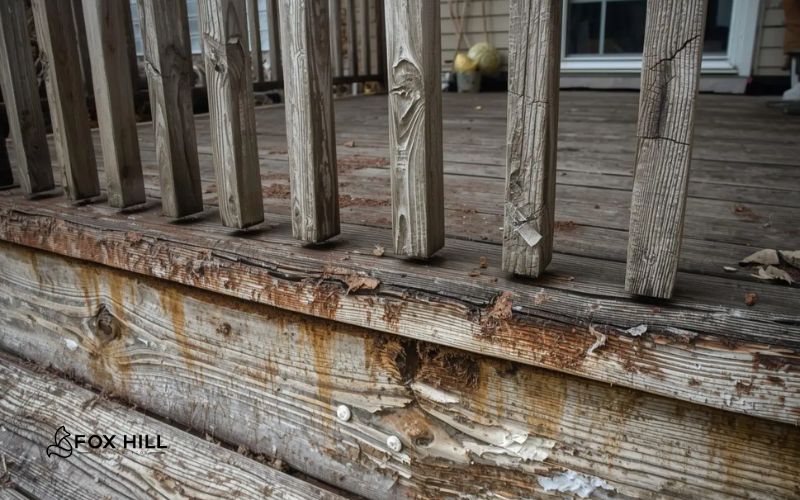
Yes, a deck with rot can be unsafe. Wood loses strength as fungi break the wood down. Faded paint may only need a new coat. Keep people away if you notice these signs:
- Part of a board feels soft under your foot.
- A board has deep cracks or an edge that curls upward.
- A handrail moves together with its post.
- A step moves when you approach the stairs.
- You notice a low spot across several boards.
- Water has left dark marks near the house.
- A gap opens between the house and deck.
What Causes Deck Rot in Connecticut Homes?
The wood below a pot may stay wet after the surface dries. Leaves in gaps trap moisture too. Fungi break down damp wood. A worn finish also lets rain reach bare wood.
The ledger joins the deck to the house. A leak here may soak wood inside the wall. Have this joint checked before new boards cover the wood.
Snow keeps wood wet. Ice may widen cracks. Solid sides below restrict air. Coastal salt in Fairfield County adds a corrosion concern for metal joints.
How to Inspect Deck Rot Before You Decide on Repair or Replacement?
You can note visible damage from the ground. Stay clear of the space beneath a weak deck.
- Note soft edges or crumbly wood on a board.
- Note any decay you can see on joists or beams.
- A post may lean to one side or have a deep split.
- Check for daylight where the deck meets the house.
- Water stains may show beneath the house joint.
- Let an inspector assess decay with a probe. Do not test a soft board with your foot.
- A loose rail or stair part belongs in your notes.
- Rust may appear around screws or metal brackets.
- Photograph areas that still hold water after other boards dry.
- Ask whether the decay extends past the first bad spot.
Detailed Comparison of Rot Locations and Repair Options!
The repair depends on which part has failed. Compare the options below:
| Deck area | When repair may work | When replacement makes sense |
| Deck boards | Your inspector finds decay in a few boards, with sound joists below. | Widespread board decay calls for a check of the joists too. |
| Rails and stairs | You have a problem with one tread or rail. Its joints are sound. | The wood at a post or stair joint has failed. |
| Joists | The damage is limited. Your contractor specifies a structural repair. | The joist has deep decay or weak ends. |
| Beams and posts | One member has failed. Temporary supports carry the load. | Several supports have decay. Price the full repair scope. |
| Ledger board | An inspector finds sound wood at both sides of the house joint. | The fasteners need sound wood. Include repairs at the house. |
| Concrete supports | The concrete remains sound and supports the load. | Concrete cannot rot. Cracks or movement may still make a base unsafe. |
Rotting Deck Repair vs. Full Replacement
a. Repair may make sense when:
A bad board may come off to reveal sound joists. If the damage is limited, you may need a localized repair. Address the reason the wood stayed wet as part of this work.
b. A Partial rebuild may make sense when:
One corner or the stairs may need a rebuild. The rest passes inspection. Get a price for this section.
c. Full replacement may be better when:
You may need several new supports or work at the house joint. Find out how much old wood you can keep, then compare the repair with a rebuild.
Filler can’t give a decayed support its strength back. A dry rot fungicide or wood fungus treatment cannot do so either.
How Much Does It Cost to Repair or Replace a Rotting Deck in Connecticut?
A new surface is only part of the bill if the frame needs work. Use these budget examples until an inspection sets your scope:
| Project scope | Rough budget | What affects the total |
| A few boards or minor rail repairs | $300 to $1,500. | Labor is part of the price. |
| Local joist or stair repairs | $1,000 to $5,000 or more. | Support for the deck adds work. |
| A partial deck rebuild | $5,000 to $15,000 or more. | More damaged wood means more work. |
| A full deck replacement | $30 to $80 or more per square foot. | Access and your board choice affect the quote. |
At $30 to $80 per square foot, replacing a 300-square-foot deck costs $9,000 to $24,000. A difficult site or extra repairs may cost more.
Read the local CT builder’s published cost guide for context. Does your quote include removal of the old deck? Ask how the crew will price extra decay at the house joint too.
Best Decking Materials for Future Rot Protection
Think about the care you want to take on once the deck is ready. Wood needs finish coats. Compare the care each option needs below:
| Material | Rot protection | Care and limits |
| Pressure-treated wood | A preservative helps the wood resist fungi. | Wet joints can still decay, even with treatment. |
| Cedar | Heartwood has natural resistance to decay. | Ask for the grade. Wet cedar can still decay. |
| Capped composite | The cap adds a layer around the board. | Leave the gaps required by the product. |
| PVC | The material has no wood for fungi to consume. | Try a sample in the sun. Allow the space required for expansion. |
Name the board product before you order. Your joists may need changes to suit the product. Include this work in the price.
Permits Required for Deck Repair in Connecticut
Tell town staff which parts will come out. New boards and new supports can need different approvals, even on a deck of the same size.
For an attached deck or major rebuild, ask when the town wants to inspect. Leave the required joints exposed until the inspection.
Speak with Darien’s code officials about your repairs. Read our Darien deck and renovation permit guide, then check which approvals apply to your property.
How to Prevent Deck Rot After Repairs or Replacement?
Use a wet day to see where water collects on the repaired deck. You can focus your care on spots that stay damp:
- Clear leaves from the spaces between boards.
- Keep soil away from the wood at each post.
- A full gutter can spill roof water onto your deck. Clear the blockage.
- Keep the space beneath the deck open to airflow.
- After a storm, look for leaks where the deck joins the house.
- The finish label tells you when to apply another coat.
- Shift pots so the wood below has time to dry.
- Your annual inspection should also include the wood beneath the boards.
When to Hire a Professional Deck Contractor in Connecticut
Keep off a deck with a soft support or loose house joint until a professional checks the damage. Keep people away from the area beneath too.
Our deck and patio renovation services cover this type of project. Before you hire another contractor or us, get proof of insurance. Set out the permit duties in the written scope.
Conclusion
We can assess your deck at Fox Hill Construction. You can review the repair options with us and compare them with a rebuild if much of the frame has decayed. Contact us with your questions about the deck.
FAQs
Can a deck with rot be repaired, or does the whole deck need replacement?
Yes, some decks need repairs to a few parts. Ask a contractor to check the wood below the boards.
How do I know if my deck rot is structural?
A joist or beam holds weight. Decay here affects support, even if the boards look sound. Have a professional check the wood.
Is a deck with rot dangerous?
Yes. Decayed wood may fail under your foot. A failed house joint can cause a collapse. Stay clear until a professional checks the damage.
How much does deck rot repair cost in Connecticut?
A board repair may cost hundreds of dollars. Support repairs can cost thousands. Get a quote for the damage at your property.
How much does a deck replacement cost in Connecticut?
The example gives $9,000 to $24,000 for 300 square feet at $30 to $80 per square foot. Your quote needs to reflect your own design and site.
Can I replace deck boards without new joists?
You can keep joists that pass inspection and suit the new board product. Have the contractor check their condition as well as the distances between supports.
What causes a deck to rot from underneath?
The top can dry even as a leak soaks the frame. Leaves between boards hold moisture too. A closed space below limits air, so the wood stays wet for longer.
Do I need a permit to repair or replace a deck in Darien, CT?
Give code officials your scope. Name the parts you will remove and their replacements. Ask which permits and inspections you need.
What is the best deck material to prevent rot?
PVC has no wood for decay fungi to consume. A wood frame below can still rot, so the joints need moisture control.
How often should I inspect my deck for wood rot?
Give the deck a check each year and after a severe storm. Do not wait for the annual check if you notice soft wood.