

Renovating your Connecticut home requires understanding the budget and planning ahead. However, how much can one expect to spend on a renovation in CT? At Fox Hill Construction, we help our clients navigate based on their requirements, priorities, and budget expectations. In addition, we assist in budgeting based on the local cost considerations in order to establish informed expectations prior to work commencing.
What is the Average Cost of Whole-Home Renovation in Connecticut?
The cost of completing a whole-house renovation can vary considerably based upon the job’s scale and complexity. While many smaller jobs can require only tens of thousands of dollars, more involved jobs may require several hundred thousand dollars or more in order to complete. Jobs in the Fairfield County and Darien can be especially expensive due to design and material considerations, labor, and other contributing factors
What is Included in a Whole-Home Renovation?
A cosmetic renovation refreshes a home’s surfaces and other cosmetic features without large-scale changes to the structure. A partial renovation involves changes to specific elements or rooms in a house. Meanwhile, a whole-home renovation addresses multiple elements in a house, and a gut renovation, in particular, requires the removal of substantial surface elements to facilitate repairs. Structural renovations may be involved in addition to large-scale repairs.
However, specific design considerations may require additional costs to be accounted for separately. Thus, every element of a project should be evaluated to establish informed budget expectations.
Whole-Home Renovation Cost per Project: Refresh, Gut or Structural?
The following are approximate figures for reference.
| Project scope | Estimated budget |
| Cosmetic refresh | $25,000–$75,000 |
| Partial renovation | $50,000–$150,000 |
| Extensive whole-home renovation | $150,000–$350,000 |
| Gut renovation | $200,000–$500,000+ |
| Structural remodel or major expansion | $300,000–$700,000+ |
What is the Average Cost Breakdown for a Whole-Home Renovation?
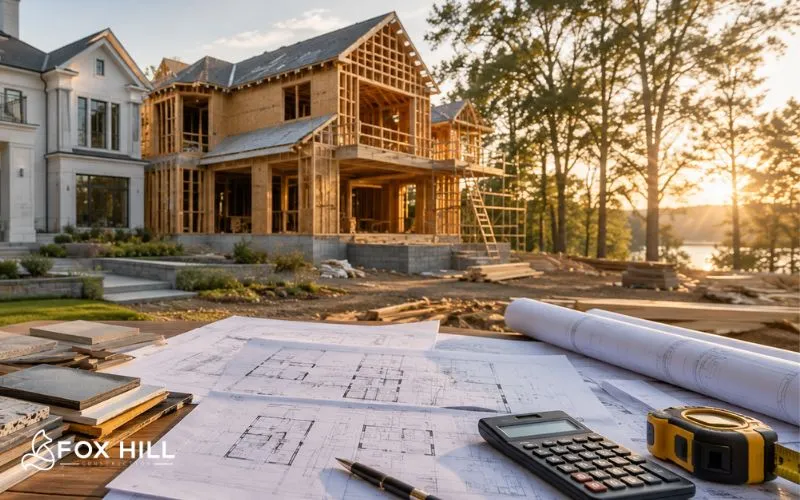
Understanding renovation costs based on categories can help a homeowner establish priorities within their proposed budget. The following allowances can be used as a guideline.
| Cost category | Planning allowance |
| Architectural services and design | $10,000–$40,000+ |
| Permits and inspections | $2,000–$15,000+ |
| Demolition and disposal | $5,000–$25,000 |
| Structural modifications | $10,000–$75,000+ |
| Electrical, plumbing, and HVAC | $25,000–$100,000+ |
| Insulation and air sealing | $3,000–$20,000 |
| Kitchen cabinetry and countertops | $20,000–$70,000+ |
| Bathroom renovations | $10,000–$35,000 each |
| Flooring, tile, trim, and painting | $15,000–$50,000 |
| Windows, roofing, and siding | $10,000–$60,000+ |
| Contingency reserve | 10%–20% of project costs |
Why Are Whole-Home Renovations More Expensive in Fairfield County and Darien?
For homeowners wondering why renovations in some towns can be more expensive than in others, several elements can contribute to this discrepancy. Older homes typically require more complex and expensive repairs and upgrades. Customization and design upgrades can add to the final cost as well. In addition, labor and trade costs can influence the renovation costs in a given area. Therefore, we recommend that homeowners considering a whole-home renovation consult to discuss their unique requirements and concerns.
What Are Some Hidden Costs For Connecticut Homeowners While Renovating?
A renovation can entail a number of expenses in addition to the ones a homeowner expects.
Water damage: Water damage can involve substantial expenses if the moisture affects the structure of a home.
- Electrical: Older homes often require electrical upgrades.
- Plumbing: Corroded and leaking pipes can be a concern in older homes.
- Hazardous materials: Suspected asbestos or lead paint may require professional abatement.
- Structural repairs: During demolition, several structural repairs may be necessary.
- Permit changes: Changes to plans may necessitate additional permits.
- Temporary accommodations: A renovation may disrupt the use of certain rooms.
- Storage and moving: Furniture and belongings may need to be relocated or stored temporarily.
- Design changes: Additional upgrades or alterations may be approved during the course of work.
- Exterior damage: Opening walls or the roof can entail exterior repair expenses.
Therefore, we recommend discussing additional expenses and allowances one wishes to include in a renovation project with our team.
Why Do Older Connecticut Homes Require Additional Investigation Before Final Pricing?
Prior to establishing the final cost for a renovation, we recommend discussing the allowances for an older home. Older structures often entail additional considerations that can impact a renovation’s final cost. As a result, a contractor may need to investigate the state of a home’s electrical, plumbing, and structural elements in conjunction with the risk of water damage and other concerns. This course of action can help establish informed allowances.
How Much of a Contingency Reserve Should I Budget for a Connecticut Renovation?
We recommend a homeowner accounts for 10%-20% of the renovation cost as a contingency reserve. Older homes with additional concerns may require additional expense reserves. In addition, a contingency reserve should only be used for approved expenses or changes to the project scope. Therefore, we recommend discussing any unanticipated costs with a contractor before approving additional expenses.
What is the Expected Renovation Cost per Square Foot in Connecticut?
The cost per square foot in a renovation can range from approximately $50-$100 per square foot for basic upgrades and up to $100-$250 or more for extensive jobs. More involved jobs, such as a gut renovation or those involving premium materials, can exceed $250-$400 per square foot. However, these figures should only be used as a guideline. Older homes and jobs involving substantial structural or system repairs and upgrades can require more extensive allowances.
What Is the Cost Difference Between Renovation, Addition, and Rebuild in Connecticut?
A renovation typically involves a structure with few concerns and focuses on repairs and upgrades to existing structural elements. An addition is a method of obtaining additional square footage, such as extra bedrooms or other elements.
Whole-Home Renovation Timeline: How Long Does a Connecticut Project Take?
The timeline for a whole-home renovation can vary considerably based on the project’s scope. A renovation can take several months to over a year to complete depending on the scale of work, permits, and other considerations.
- Initial consultation
- Scope development
- Design
- Estimating
- Municipal approvals
- Demolition
- Structural work
- System upgrades (plumbing, electrical, and HVAC)
- Interior finish work (cabinetry, flooring, and paint)
How Can I Prepare a Realistic Whole-Home Renovation Budget?
When developing a realistic renovation budget, one should start with establishing their renovation goals and prioritizing elements. Next, a homeowner should establish the elements they wish to renovate versus those which they are willing to live with. Furthermore, a consideration should be made regarding the extent of repairs or upgrades one wishes to pursue. One’s home’s age and state should be taken into account when developing a renovation budget as well.
How Can I Compare Whole-Home Renovation Estimates From Contractors?
When comparing estimates from contractors, one should compare the following elements:
- Scope: Does the estimate describe the tasks in detail?
- Exclusions: Are the responsibilities and exclusions described in detail?
- Materials: Are the materials and allowances detailed?
- Permits: Who applies for the permits and what fees are due?
- Changes: How will additional changes affect the cost?
- Payment: Are the payment terms described in detail?
- Timeline: Is the expected work duration described in detail?
- Credentials: Have the contractor’s credentials been verified?
Therefore, a comparison should be made between similar estimates in terms of the project scope. After selecting a contractor who has been able to address one’s requirements and concerns, one should proceed to the next steps of the renovation.
Professional Whole-Home Renovation Planning in Connecticut
Our professional contractors can handle the complexities of older homes, structural alterations, and multiple trades. Coordinated planning can help streamline the process of obtaining permits, managing a budget, and developing realistic timelines. We encourage our clients to understand their project requirements in detail before commencing work on a renovation. Therefore, if a homeowner wishes to obtain assistance with managing their renovation, we encourage them to “request a whole-home renovation consultation”
Conclusion
A successful renovation requires informed expectations in terms of costs and timelines. Homeowners considering a whole-home renovation in Connecticut should take local considerations into account when developing their renovation budget. Our team at Fox Hill Construction encourages informed decisions prior to commencing work on a renovation project.
FAQs
How much does a whole home renovation cost in Connecticut?
Extensive renovations can cost $150,000 to $350,000 and more, while full renovations and structural jobs can be substantially higher.What is the average cost per square foot for a home renovation in CT?
Basic updates have the range of $50 to $100 per square foot, but extensive jobs have costs over $250 per square foot.How much does it cost to renovate a 2000 square foot house in Connecticut?
A substantial renovation can cost $200k to $500k or more; the final cost is dependent on the scope of work and the materials.What is included in a whole home renovation?
Typically, a whole home renovation encompasses kitchens, bathrooms, finishes, and structural or system upgrades; the scope of work determines if structural or exterior elements would be included.What is the difference between a gut renovation and a remodel?
A remodel renovates specific elements or areas and a gut renovation rebuilds substantial surface elements.How much contingency should I budget for a Connecticut renovation?
One should budget for approximately 10% to 20% contingency; older homes with unknown conditions may need more.Do I need permits for a whole home renovation in Connecticut?
Depending on the scope, permits may be necessary for a renovation; therefore, one should consult with their local building department.Can I stay in my house during a whole home renovation?
It can be dependent on the extent of work and the impact on utilities and the structural integrity of the home. Therefore, one should consider temporary accommodations.
Is renovating cheaper than rebuilding a home in Connecticut?
Renovating can be more cost-effective, when the structure is suitable for reuse, but extensive structural repairs may make rebuilding a more cost-effective option.
What hidden costs should I expect when renovating an older Connecticut home?
Water damage, electrical and plumbing repairs, structural issues, and hazardous materials can have additional costs.