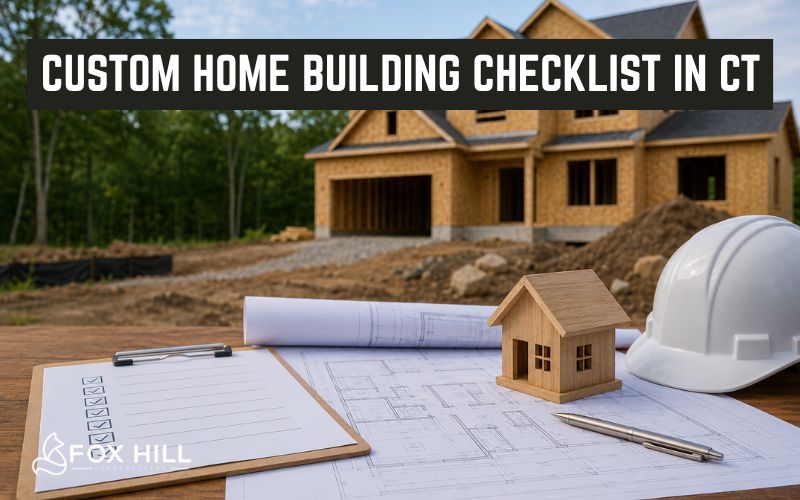
Custom home building is a major emotional and financial investment. You need to decide everything from lot selection and home layout to door handles. This freedom is exciting, right? But you may miss important steps in home construction without a solid checklist.
Connecticut’s landscape adds more complexity to home building in the form of building codes, permit approvals and wetland regulations. So, checklist formation is the first step before home building. It will keep you on track, avoid common mistakes, save you from delays and ensure a smooth working process.
Simple Steps to Build a Custom Home in Connecticut!
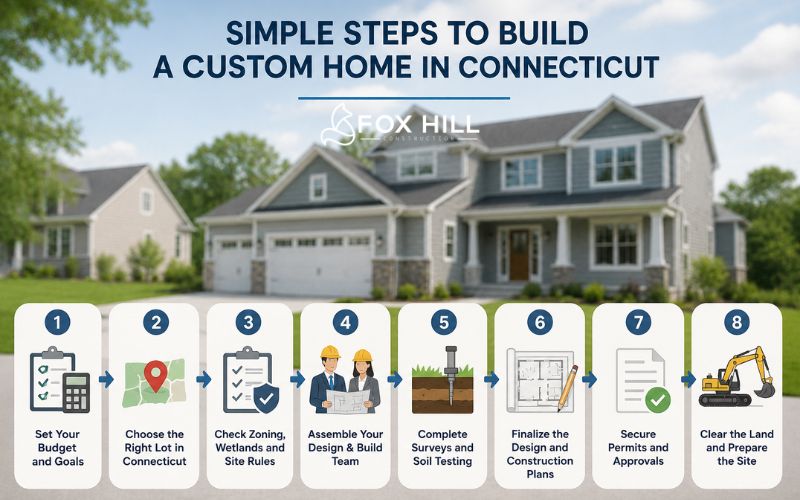
Step 1: Set Your Budget and Goals
How much can you spend on a home build? What will be the layout of the house? Set your budget and goals in the first step. Your budget must include lot price, site preparation, permit and design fee, landscaping and some extra funds for unexpected expenses.
Learn about the financing process. Construction loans in Connecticut require a detailed project plan and a reliable builder. So a planned budget and clear goals will help you in the loan approval process as well.
Step 2: Choose the Right Lot in Connecticut
Lot selection is an important decision in the whole building process. It affects your home layout, the cost of site preparation and the project timeline.
Land prices are different based on town, area and access to basic utilities. Rural areas offer large lots at lower prices. On the other hand, areas near shorelines have expensive lots and strict wetland regulations and building codes.
During lot selection, consider basic utilities, land topography, soil conditions and whether it is near flood areas or wetlands.
Step 3: Check Zoning, Wetlands and Site Rules
New home builders often struggle with zoning regulations. Building rules are not the same in every town in Connecticut. So, you should confirm zoning rules before buying land or finalizing a home layout.
- Look at the lot size and setback requirements from property lines or roads.
- Check FEMA flood maps to see if your lot is in a flood zone.
The Wetlands Commission approves any work near wetlands. A little change can set back your project for weeks. So, check all these rules before moving forward with your building plan.
Step 4: Assemble Your Design & Build Team
Custom home building requires a team of professionals who work together. Your main team must include the following members:
- Architect
- Home builder
- Structural engineer
- Civil engineer
- Estate attorney
All the members will finalize your design plan and ensure it’s safe and legally buildable. Always check the licenses of your design team through the CT Department of Consumer Protection. Try to involve your builder early, before final design, to prevent design changes and avoid delays.
Step 5: Complete Surveys and Soil Testing
These are two important steps for getting a municipal permit. A land surveyor measures your property and confirms its exact boundaries.
Soil testing is essential if your property does not have access to a public sewer line. A soil expert performs a drainage test to find out if a septic system can be installed or not.
Step 6: Finalize the Design and Construction Plans
Now your designer converts your plan into a detailed construction drawing. The plan includes floor layout, external view, cross sections and all structural details. Select quality materials for your building.
Step 7: Secure Permits and Approvals
Connecticut has strict zoning regulations, extreme winters and rolling topography. You cannot break ground without legal permits.
Step 8: Clear the Land and Prepare the Site
Contractors start working after permit approval. They clear the land and prepare it for construction. It includes the removal of trees, rocks, or other waste.
Step 9: Pour the Foundation
Which foundation do you want for your home? Slab, crawl space, or basement are common foundation types. Concrete is poured to form the base in this step. Then the drainage system and waterproofing are added.
Step 10: Frame the Home
The construction site finally takes the shape of the house in the framing phase. The floor, walls and roof structure are built. Many homes are built on wood framing in Connecticut.
Step 11: Install Roofing, Windows and Exterior Walls
Add this essential step to your checklist for building a house. It ensures the protection of your home from weather conditions. Use waterproof layers in the roof to prevent leaks. Windows and doors are also sealed here.
Step 12: Complete Mechanical, Electrical and Plumbing Work
Now, HVAC systems are installed. Professionals place the electrical wiring, pipes, heating and cooling systems before drywall and insulation are done. Each work is done through licensed contractors to bypass the inspection process.
Step 13: Pass Inspections and Close Up the Walls
Your house requires inspection of framing, plumbing, electrical work, heating and cooling systems. Your builder arranges these inspections with the local authority. Don’t move forward until each inspection is approved.
Step 14: Complete Interior Finishes and Millwork
You cannot skip finishes and millwork in the house construction checklist. It is the addition of decorative elements to walls, floors and ceilings. Millwork is the woodwork done to flooring, cabinetry and countertops.
Step 15: Final Walkthrough, Certificate of Occupancy and Move-In
Your builder now walks through the house. You can tell if repairs or adjustments are needed. Then a final inspection will be done by the building official. Officials issue a CO after the final inspection. Now your construction loan has been changed into a regular mortgage.
Cost of Building a Custom Home in Connecticut!
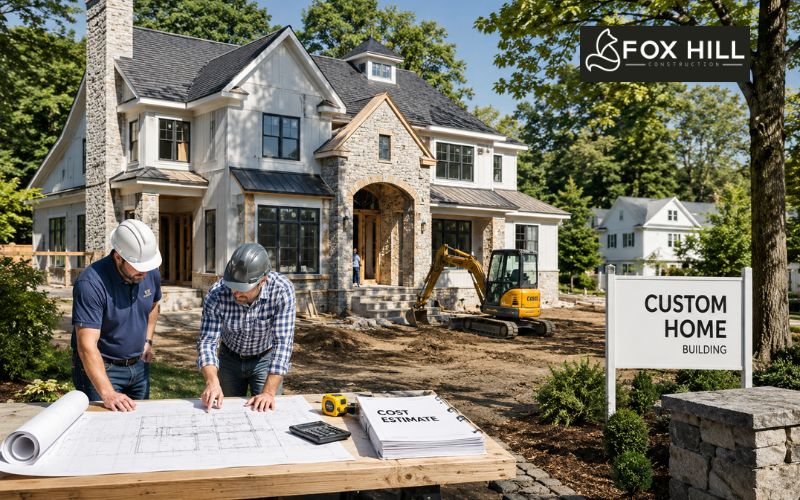
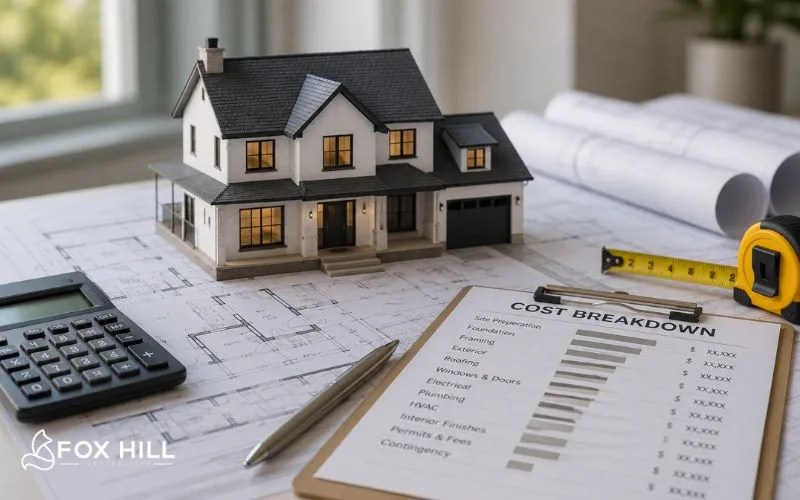
Custom home building costs between $250 and $500 per sq. ft. This price only covers materials, labor, framing and electrical work. Land, design and permit approvals will cost you extra. Contact reliable contractors and get a detailed estimate for exact pricing.
Timeline for Building a Custom Home in Connecticut!
| Pre-construction phase | 3 to 6 months
|
| Physical construction | 9 to 15 months |
| Final Walkthrough and Handover | 1 month |
Land, Soil and Site Conditions
Connecticut has uneven terrain. That’s why land and soil preparation are necessary. Contractors level the ground and mark the house boundary based on the survey map. Utility planning also begins in this phase. You may also need erosion control measures to stabilize the terrain. So, discuss this point with the contractor as well.
Permits, Zoning and Approvals
You need to get five to eight permits for your home construction. It includes a building permit, zoning permit, electricity and HVAC permit and two to three permits from the wetlands and health district.
Do you find the permit approval process stressful? Don’t worry, Fox Hill Construction handles the permit process as part of our custom home building service. You can connect with our contractors to discuss your home design and let us build your home that is durable and legally safe.
Conclusion
Home building is a long process and a home builder’s checklist makes it easier. It helps you stay organized, allowing you to follow a construction schedule and avoid costly repairs. Follow the checklist carefully to make your building process smooth and stress-free.
FAQs
- How long does a custom home build in Connecticut take?
It takes one and a half years to build a complete home. - What is the first step in building a custom home?
The first step to building a home is making a checklist that will track you. - Do I need a soil test before building in Connecticut?
Yes. You need a soil test before construction begins. - What permits are needed for a custom home in CT?
Building permits, wetlands permits, or health department approvals are mostly required during a home build. - What happens before framing starts?
The foundation is poured and inspected by the local team before framing begins. - What is a Certificate of Occupancy?
A Certificate of Occupancy is a document that confirms your house is built according to local building codes. You cannot occupy a home without this certificate in Connecticut. - How do inspections work during custom home construction?
Inspections are done at different steps during home construction. They ensure your house complies with local codes. - How can I avoid delays during a custom home build?
Make a proper budget, get all permits and consult your contractor during the design phase. It helps you avoid delays during construction.